We aim to bring order, trust, and orchestration to the built environment.
Synapse is deterministic. It checks claims from AI and other systems against the rules in force before anything happens.
Synapse is deterministic. It checks claims from AI and other systems against the rules in force before anything happens.

Three companion books on one question: what must a claim prove before anyone acts on it?
1. The Authority to Act: What AI Must Prove Before We Trust It
2. Authority Drift: How Trust Fails Before Anyone Notices
3. Earning the Right to Act

The built environment is becoming more intelligent, but intelligence without authority is not enough.
If machines, systems, and people are going to operate together at scale, they need a clear model of control.
That is the problem Hamilton Labs is solving.
Our long-term ambition is to help shape a more governed built environment — one where complex operations can be executed with greater confidence, transparency, and precision.
If you share that ambition, Hamilton Labs is worth a conversation.
We are building Synapse — a deterministic governance and orchestration platform designed for complex physical operations.
Within Synapse:
We are not interested in superficial automation.
We are interested in systems that improve reliability, accountability, and consistency in the real world.
That means designing for:
Hamilton Labs is a founder-led effort.
That matters because the work is not generic. It requires a clear point of view, strong discipline, and a willingness to define the system from first principles.
HL Core
The constitutional authority layer. HL Core defines the rules, permissions, validation logic, and execution boundaries that govern how the system behaves.
HL Maestro
The orchestration layer. HL Maestro coordinates execution across machines, systems, data streams, and people — always within the constraints defined by HL Core.
Together, they create a platform where actions can be governed before they are executed.
.png/:/rs=w:400,cg:true,m)

Synapse is built to coordinate the realities of the built environment, including:
This is not about adding more tools. It is about aligning the tools around a trusted system of authority.
Synapse

That means:
Managing Director
Hamilton Holdings Pte Ltd
Founder
Hamilton Labs BE3DP Ecosystem
Creator
Hamilton Labs Synapse Platform


Pranjal is a mechanical engineer and AM/BE3DP researcher specializing in advanced materials and fabrication systems. With a background in mechanical engineering and product design, he's currently pursuing a Master’s in Innovation & Design at SUTD, focusing in material science, robotics & scalable manufacturing.


NAMIC's inaugural directory of companies involved in 3D Printing Technology.

Hamilton Labs is ready to facilitate, grow and lead the challenges ahead

We have the expertise to deliver exceptional results.
From prototyping single parts to manufacturing at scale, we have it covered. We strive to provide tailored solutions that align with your vision and project goals. Explore our diverse range of services and experience manufacturing excellence like never before.
We’ve built the tech, proved it works, and are ready & able to partner to build the next big thing.
Let us guide you through to the Future of Manufacturing.
Future Proofing the Built Environment together with 3D Printing & Additive Manufacturing.
Our dedicated team meticulously creates formulations that yield remarkable results in additive manufacturing. For instance, our ToughPLA is 8x stronger than other PLA blends in the market.
We continually iterate our material blends to ensure unparalleled quality. At each stage, we test the performance of our blends with automated process control equipment.
We welcome custom material requests for specialized projects, allowing you to achieve your unique objectives with unmatched efficiency.
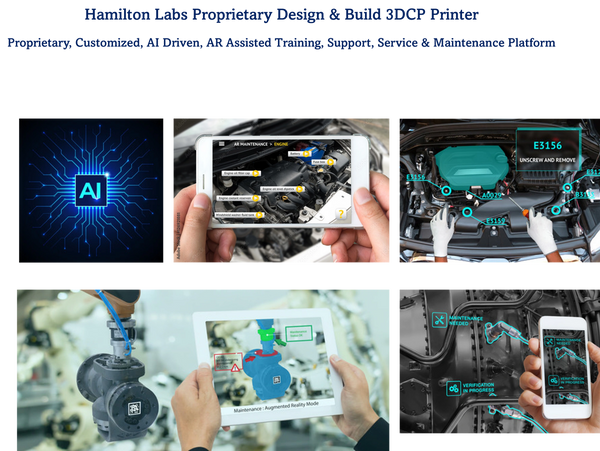
At the heart of our additive manufacturing capabilities lies our in-house robotics team. Our engineers and technicians work tirelessly to develop end-to-end solutions that push the boundaries of what’s achievable. By harnessing the power of robotics, we unlock new use-cases and unlock limitless possibilities in the world of additive manufacturing. With our expertise, your projects can achieve unprecedented levels of automation, precision, and speed.

"3D Printing has moved well beyond prototyping, rapid tooling, trinkets, and toys."
- Harvard Business Review
Benefits
Cost: Being able to create a real product directly from a digital file takes away the need for transport costs and the labour involved.
Waste: Since every design, dimension and measurement is digitalized, there is a vast r
"3D Printing has moved well beyond prototyping, rapid tooling, trinkets, and toys."
- Harvard Business Review
Benefits
Cost: Being able to create a real product directly from a digital file takes away the need for transport costs and the labour involved.
Waste: Since every design, dimension and measurement is digitalized, there is a vast reduction in the amount of waste created in the manufacturing process. Any material left over is able to be recycled.
Specifics: There is also the ability 3D printing gives in terms of customisation and originality, with products created to exact specifications given by the customer.
Pioneering Green-Tech Innovations Through Additive Manufacturing and the Circular Economy.
The Circular Economy unites the entire supply chain, keeping resources in motion. PLUS, additive manufacturing enables completely new designs to be produced and supply chains to be significantly reduced.
3D printing has the potential to “combine the solidity, durability and strength of the industrial age, with the nimbleness, flexibility and adaptability of the virtual age.” This mix will be critical for addressing the complex challenges of a rapidly changing and uncertain world
Additive Manufacturing offers the possibility of creating hig
3D printing has the potential to “combine the solidity, durability and strength of the industrial age, with the nimbleness, flexibility and adaptability of the virtual age.” This mix will be critical for addressing the complex challenges of a rapidly changing and uncertain world
Additive Manufacturing offers the possibility of creating high-performance materials and processes with smaller carbon footprints

The Sustainable Development Goals was launched in 2015 to ensure everyone has access to a safely-managed household toilet by 2030. This makes sanitation central to eradicating extreme poverty.
In 2013, the United Nations General Assembly officially designated November 19 as World Toilet Day. World Toilet Day is coordinated by UN-Water in collaboration with governments and partners.
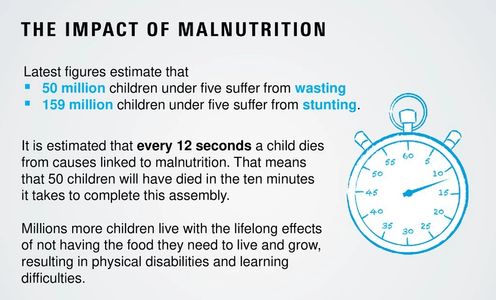
Right now, 600,000 of the world’s 1.7 million who die annually from unsafe water and sanitation (due primarily to open, unclean toilets) live in India. As billionaire philanthropist Bill Gates recently wrote on his blog, those kinds of conditions make a plan like Clean India worthy of both praise and financial support.
The World Bank links one in ten deaths in India to poor sanitation. From contaminated groundwater children pick up chronic infections that impair their bodies’ ability to absorb nutrients. Almost 44 million children under five, says the bank, have stunted growth, and every year over 300,000 die from diarrheal diseases.

Climate change is the greatest environmental challenge facing the world today. It is essential that we act now by reducing emissions and product waste and by adapting to change.
Now, we are set to tackle specific problems like CO2 emissions and climate change

Tackling Climate Change Through a Circular Economy
A circular economy is an economic system aimed at eliminating waste and the continual use of resources.