Synapse operates through two complementary layers

HL Core
Core defines the constitutional rules of the platform. It determines what is allowed, what must be validated, and what boundaries cannot be crossed.
HL Maestro
Maestro translates that authority into coordinated action. It manages orchestration across systems, workflows, and operators while remaining subordinate to HL Core.
This separation is deliberate. It ensures the platform is not merely reactive. It is governed.
What it enables
With Synapse, Hamilton Labs is building the conditions for:
- Safer automation.
- More reliable construction operations.
- Better coordination between digital and physical systems.
- Clearer operational accountability.
- Scalable control across complex environments.
Design philosophy
Synapse is not designed to be noisy or generic.
It is designed to be deterministic, legible, and trusted.
That means every layer has a role, every action has a path, and every output can be traced back to an authority structure.
Synapse is for organizations that want more than automation. It is for organizations that want governed execution.
HL Core is where trust begins.
HL Core is the constitutional authority layer of Synapse.
It defines the rules, boundaries, permissions, and validation logic that govern how the platform behaves.
Constitutional authority
HL Core is not an interface or a dashboard.
It is the source of authority inside Synapse.
Its role is to define what the platform may do, what must be checked before action, and what conditions must be satisfied before execution continues.
What HL Core governs
HL Core governs:
- Permissions.
- Policy logic.
- Validation gates.
- Execution constraints.
- Trust boundaries.
- Audit requirements.
This ensures the platform operates with discipline rather than improvisation.
Governance model
HL Core is built to support:
- Deterministic decision logic.
- Controlled access.
- Verified handoffs.
- Traceable actions.
- Clear operational boundaries.
This is the layer that keeps the platform aligned with its constitutional intent.
Relationship to the rest of Synapse
HL Core does not execute everything itself.
Instead, it defines the conditions under which execution is allowed and the constraints under which orchestration must operate.
HL Maestro works within those rules to coordinate action across the wider system.
Design intent
HL Core is designed to be:
- Stable.
- Authoritative.
- Auditable.
- Non-negotiable.
- Clear.
It is the governance substrate that makes everything else trustworthy.
HL Maestro turns authority into coordinated action.
HL Maestro is the orchestration layer of Synapse.
It coordinates action across systems, machines, data streams, and human operators within the authority defined by HL Core.
Orchestration role
HL Maestro is responsible for turning governed intent into structured execution.
It is the part of Synapse that manages sequencing, coordination, and flow across complex operational environments.
What it connects
HL Maestro can coordinate across:
- BIM workflows.
- Robotics.
- Digital twins.
- Sensor inputs.
- Logistics systems.
- Engineering systems.
- Construction machinery.
- Human operators.
Its role is not to replace these domains, but to align them.
Controlled execution
Orchestration only works when control is explicit.
HL Maestro ensures that every workflow follows the constraints defined by HL Core, with validation gates and trusted execution pathways built into the process.
That means execution is not loose, implicit, or ad hoc.
It is governed.
Human-in-the-loop
Not every decision should be automated.
HL Maestro is designed to support human judgment where it matters most, while still improving speed, visibility, and consistency across the system.
This creates a balance between automation and accountability.
Operational value
HL Maestro helps create:
- Better coordination.
- Cleaner handoffs.
- Lower ambiguity.
- More reliable sequencing.
- Greater control over complex workflows.
This is especially important in the built environment, where too many failures happen at the boundaries between systems.
Operational value
HL Maestro helps create:
- Better coordination.
- Cleaner handoffs.
- Lower ambiguity.
- More reliable sequencing.
- Greater control over complex workflows.
This is especially important in the built environment, where too many failures happen at the boundaries between systems.
Synapse is designed for environments where many systems must work together under pressure.
It is especially relevant where coordination, safety, traceability, and execution control matter.
Robotics-enabled construction
Robotics can increase speed and consistency, but only if the operating environment is governed.
Synapse helps coordinate robotic workflows, validate execution conditions, and align machine activity with broader project rules.

If your operation depends on coordination across multiple systems, Synapse may be the control layer you need.
Hamilton Labs is building for real-world operations, not abstract theory.
Our focus is on systems that can support serious execution in complex environments.
What we value
We value proof over promotion.
That means:
- Real deployments.
- Measurable outcomes.
- Clear technical rationale.
- Strong operational discipline.
- Credible partnerships.
Areas of work
Hamilton Labs works across the intersection of:
- BE3DP.
- Automation.
- Robotics.
- Built-environment systems.
- Operational orchestration.
- Platform governance.
What this looks like in practice
The goal is not to create isolated demonstrations.
The goal is to build repeatable systems that can be trusted in structured operational settings.
That includes:
- Pilot programs.
- System design.
- Workflow orchestration.
- Technical validation.
- Deployment readiness.
If you want to understand what Hamilton Labs can do, the best place to start is a conversation.
More About Us

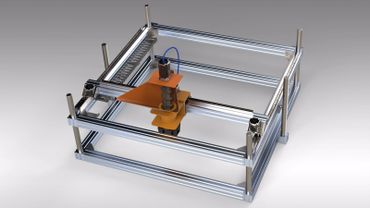
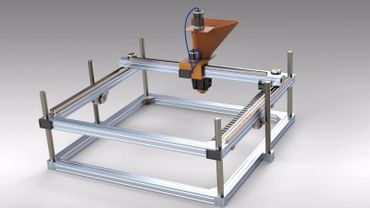
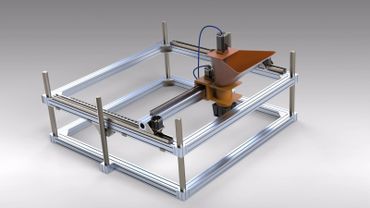
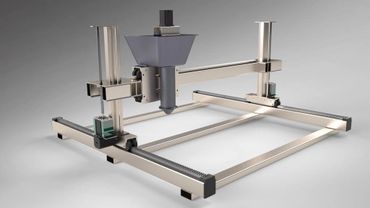
We Design & Build Our 3D Printers
Our Beton Series 12x12x12m
3DCP Printer starts at USD188,000.00, ex-factory.
Photo Gallery





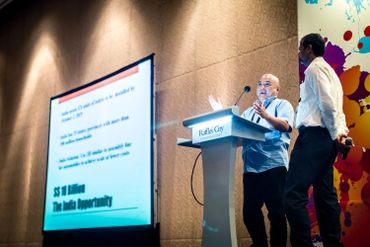
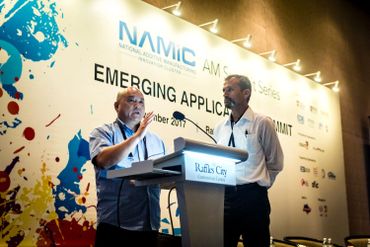
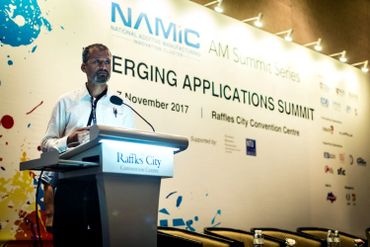

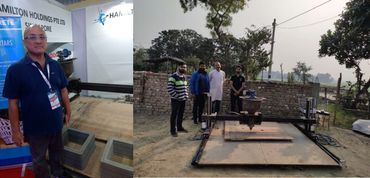
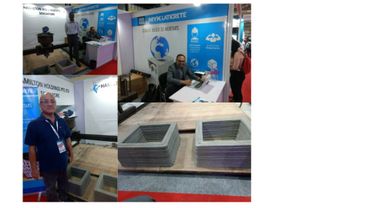
Hamilton Labs Activities


3D Printing HUB in India